21+ Years in Pomona · Licensed & Insured

Roofing Contractor in Pomona, CA Built for Heat, Wind & Winter Storms

Pomona roofs have a rough job. They bake through months of 95°F-plus afternoons, take Santa Ana gusts every fall and winter, and then get hit with a season's worth of rain in a few heavy storms. Underlayment cracks, tiles slip, and flashing fails during the dry months, and you usually don't find out until water's coming through the ceiling in January. Pomona Roofing Group has been finding and fixing those hidden problems since 2005. We repair, replace, and install roofs that hold up to inland valley conditions, and we tell you plainly what your roof actually needs.

We know Pomona's housing stock house by house. That includes the skip-sheathed Victorians and Craftsmans in Lincoln Park, concrete tile roofs in Phillips Ranch with 40-year-old felt underneath, and post-war ranch homes in North and South Pomona with low-slope additions that were never tied in right. We handle permits with the City of Pomona, work through HOA and historic review when it applies, and keep you updated from the first inspection to the final cleanup.

  • Serving Pomona since 2005
  • Bonded and insured
  • Free consultations and roof inspections

Our business has grown through word of mouth from Pomona neighbors. Families in historic homes, Phillips Ranch tile owners, landlords, and local business owners have trusted us with their roofs since 2005.

Request Your Free Estimate

No obligation. Fast, honest quotes.

Your information is never shared.

Online Estimates
Onsite Service
Licensed & Insured
Customer Rated
Local Expertise

Why Pomona Homes Need a Roofer Who Knows the Inland Valley

Pomona isn't coastal LA. The city sits at about 850 feet in the eastern Pomona Valley, beyond the reach of the marine layer, so roofs here take heat, UV, wind, and short bursts of heavy rain that cause their own kinds of damage. Here's what's working against your roof.

Heat, UV, and Rain That Arrives All at Once

Summer highs here usually sit in the low-to-mid 90s, and most years bring several days in a row of 100–110°F heat. On those afternoons a dark asphalt shingle can top 150°F. That strips granules, dries out the asphalt, and cracks shingle tabs, while heat trapped under clay and concrete tile makes the underlayment brittle. Pomona averages only about 17–18 inches of rain a year, and nearly all of it falls between November and March, often in a few atmospheric-river storms like the ones in early 2023 and February 2024. With 7–8 dry months, damage goes unnoticed. Santa Ana gusts that can top 50 mph near the foothills lift tabs and knock ridge tiles loose, and the brushy edges near Phillips Ranch and Ganesha Hills face real wildfire ember exposure.

A Housing Stock Spanning 140 Years

Few cities have roofs as varied as Pomona's. Lincoln Park, Wilton Heights, and Hacienda Park still have 1880s–1920s Victorians, Queen Annes, and Craftsman bungalows. Many have skip-sheathed decks under several old reroofs. Spanish Colonial Revival homes from the 1920s and '30s have barrel clay tile and parapets that hide flat sections and leak-prone scuppers. Most of the city is 1940s–60s ranch and tract housing with low-pitch roofs, leftover tar-and-gravel sections, and owner-built patio covers. Phillips Ranch, built mostly from the 1960s through the 1980s, is full of concrete tile roofs where the tile has outlasted the felt beneath it. Downtown and the Arts Colony have early-1900s masonry commercial buildings with aging built-up flat roofs. Each type fails in its own way.

Permits, Title 24, Fire Zones, and Historic Review

Reroofing in Pomona generally requires a permit and inspection from the City of Pomona Building & Safety Division. When a large share of a roof is replaced, California's Title 24 cool-roof rules can require minimum solar reflectance values for steep-slope roofs in our inland climate zone, and low-slope roofs have their own reflectance and insulation rules. Homes in Very High Fire Hazard Severity Zones fall under CBC Chapter 7A, which calls for Class A roof assemblies and ember-resistant vents. In the Lincoln Park, Wilton Heights, and Hacienda Park historic districts, changing a roof's material or profile may need a Certificate of Appropriateness first. Phillips Ranch HOAs often review tile color and profile. On older homes, possible asbestos felts fall under SCAQMD Rule 1403, and pre-1978 trim calls for lead-safe work practices.

A Community That Values Honest Pricing

Pomona has about 150,000 residents. Many families have owned the same home for decades, and many households live on fixed or moderate incomes. Landlords, small multifamily owners, and the rental market around Cal Poly Pomona and Western University need roofs that last without overspending. New buyers often inherit an aging roof that came up during escrow inspection. Storm-chasers and unlicensed crews show up after every big storm, so itemized bids, permitted work, financing, and straight answers on repair versus replacement matter a lot here.

Know The Signs

Common Roofing Problems We See Across Pomona

Most Pomona roof failures follow a few predictable patterns: heat damage builds all summer, wind loosens things in the fall, and the leaks show up in the first big winter storm. Here are the problems we're called for most, starting with the ones that need attention right away.

Active Storm Leaks and Wind-Torn Roofing

Emergency

Water coming through ceilings, light fixtures, or walls during a storm, or missing shingles and ridge tiles after a Santa Ana wind event. Once water reaches the decking and drywall, damage spreads fast and can lead to mold, rot, and electrical hazards.

Why it happens here

Pomona gets most of its yearly rain in a handful of intense storms. Cracked underlayment and failed flashing go unnoticed for 7–8 dry months, then many homes start leaking during the first atmospheric river. Santa Ana gusts over 50 mph break shingle seal strips and pop off hip and ridge tiles, which leaves openings that the next storm finds right away. Because the leaks happen all over town at once, roofers get backed up quickly, so it pays to have a contractor lined up before the season starts.

Signs to watch for
  • Dripping or stained ceilings during rain
  • Shingles, tabs, or ridge tiles in the yard
  • Exposed underlayment or bare decking visible from the street
  • Wet attic insulation
  • Bubbling paint or drywall near exterior walls
  • Water near light fixtures or smoke detectors
Local patterns

Leak calls rise sharply in the first heavy storm between November and February. Wind damage shows up most on exposed hillside homes in Phillips Ranch, Ganesha Hills, and Mountain Meadows. Flat-roofed masonry buildings downtown tend to leak at parapets and scuppers when water ponds.

Our fix

Emergency tarping or a temporary seal to stop water entry, photo documentation for insurance, and then a permanent repair to the flashing, underlayment, or roofing once the weather clears.

Failed Underlayment Beneath Tile Roofs

Serious

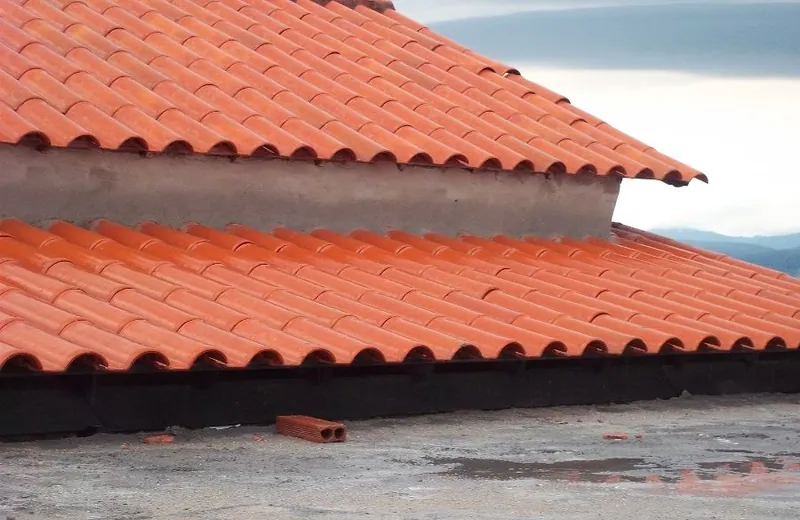
Concrete and clay tiles shed most water, but the felt or synthetic underlayment beneath them is the real waterproofing layer. When that layer turns brittle, tears, or rots, water that gets past the tiles goes straight to the roof deck.

Why it happens here

Many Pomona tile homes were built in the 1960s–80s with 30-lb felt that's now 35 to 55 years old. Summer heat trapped under the tiles cooks the felt until it cracks, especially on south- and west-facing slopes. Owners often assume a tile roof lasts 50+ years, and the tile may, but the underlayment usually doesn't. Because the tiles look fine from the ground, these roofs often fail without warning in a heavy storm.

Signs to watch for
  • Leaks on a tile roof that looks intact
  • Crumbling black felt visible at tile edges or eaves
  • Slipped or sliding tiles
  • Stains along valleys or below skylights
  • Tiles that rock or sound hollow
  • Daylight visible through the attic deck
Local patterns

This is the most common big job in Phillips Ranch, where many concrete tile roofs from the 1970s and '80s are on original felt. Clay tile Spanish Revival homes near Ganesha Park and Hacienda Park show the same failure, often along with parapet issues.

Our fix

A tile lift-and-relay: remove and save the tiles, replace damaged decking, install modern underlayment and flashing, and then reset the original tiles.

Heat-Aged and Granule-Stripped Asphalt Shingles

Moderate

Asphalt shingles that have lost their protective granules, dried out, curled, or cracked from years of heat and UV. Once the granules are gone, sunlight breaks down the asphalt quickly and the shingle stops protecting the deck.

Why it happens here

On a 100°F Pomona afternoon, dark shingles can top 150°F, and the inland sun is strong all year. South- and west-facing slopes often wear out years before the warranty suggests. Older 3-tab shingles on post-war tract homes are especially vulnerable. Poor attic ventilation, which is common in 1940s–60s houses, traps heat under the deck and speeds up the damage from below.

Signs to watch for
  • Granules piling up in gutters or at downspouts
  • Faded, bald, or blotchy shingle patches
  • Curling, cupping, or cracked tabs
  • Shingles that crack or crumble when touched
  • Very hot attic and high summer cooling bills
  • Uneven wear between sunny and shaded slopes
Local patterns

This is widespread on ranch and minimal-traditional homes across North Pomona, South Pomona, Westmont, and along the Holt Avenue corridor, where many roofs are on their second or third 3-tab install. West-facing slopes usually fail first.

Our fix

Targeted repair if the damage is limited. If it's widespread, a full replacement with cool-roof-rated shingles and better attic ventilation to cut heat buildup.

Flashing Failures at Chimneys, Parapets, and Walls

Serious

Flashing is the metal and sealant that waterproofs the joints where a roof meets a chimney, wall, parapet, skylight, or vent. When it rusts, pulls away, or was installed poorly, water runs into the wall cavity and roof deck.

Why it happens here

UV breaks down roofing mastics and sealants quickly in Pomona's sun, and years of daily heat cycles pull flashing loose. Older homes often have rusted galvanized flashing or have been patched with roofing cement many times. Parapets on Spanish Revival homes and downtown masonry buildings are a constant problem, because water collects behind them and has to drain through small scuppers during intense rain.

Signs to watch for
  • Stains on walls or ceilings next to chimneys
  • Cracked or peeling caulk and mastic
  • Rusted, bent, or lifted metal flashing
  • Water stains on parapet walls inside
  • Damp or efflorescent brick near the roofline
  • Leaks only during wind-driven rain
Local patterns

We see this often on brick chimneys in Lincoln Park and Wilton Heights Craftsmans, at parapets on Spanish Colonial homes, and on early-1900s commercial buildings in Downtown Pomona and the Arts Colony.

Our fix

Remove the failed flashing, then install new step, counter, or parapet flashing with proper laps and fasteners instead of surface caulk. Clear and resize scuppers where needed.

Ponding on Flat and Low-Slope Roofs

Moderate

Standing water that stays on a flat or low-slope roof for more than about 48 hours after rain. Ponding speeds up membrane breakdown, adds weight, and finds every seam and crack. Many low-slope roofs in Pomona are past their service life.

Why it happens here

Pomona's rain often comes as a few inches in a day or two, which overwhelms clogged drains and undersized scuppers. Many post-war homes have patio covers and owner-built additions tied into the main roof at too low a pitch. Older built-up and tar-and-gravel roofs sag over time, and UV dries out exposed coatings during the long summer.

Signs to watch for
  • Puddles or dirt rings on the roof after rain
  • Blistered, alligatored, or cracked roof surface
  • Leaks at additions or patio cover tie-ins
  • Sagging ceilings under low-slope sections
  • Exposed or bare gravel on built-up roofs
  • Clogged drains or scuppers
Local patterns

Common on downtown masonry commercial buildings, small multifamily properties near the Fairplex and Holt Avenue, and on tract-home additions throughout South Pomona and Westmont.

Our fix

Clear and improve drainage, add tapered insulation or crickets where needed, then apply a reflective coating or install a modern modified-bitumen or single-ply membrane.

Rotted Decking, Eaves, and Fascia

Moderate

Wood decking, rafter tails, eaves, and fascia boards softened by long-term leaks, dry rot, or termites. Rotted decking won't hold nails properly, and damaged eaves let pests and wind-blown embers into the attic.

Why it happens here

Pomona's older housing stock means lots of wood that's been exposed for 60 to 140 years. Small leaks that went unnoticed for several winters slowly rot the deck. Termite damage at eaves is common, and pre-1978 painted trim calls for lead-safe handling. On Victorians and Craftsmans, skip sheathing under several old reroofs often can't meet current code without new solid sheathing.

Signs to watch for
  • Soft or spongy spots when walking the roof
  • Sagging rooflines or wavy shingles
  • Crumbling or stained fascia boards
  • Peeling paint at eaves
  • Termite frass or tunnels near rafter tails
  • Gaps at eaves letting in birds or rodents
Local patterns

Most common in Lincoln Park, Wilton Heights, and Hacienda Park historic homes, and on post-war tract houses where hidden damage turns up only after tear-off reveals multiple layers.

Our fix

Replace the damaged decking and fascia, add solid sheathing over skip boards where required, and seal the eaves to keep out pests and embers.

Inadequate Attic Ventilation

Minor

Not enough intake and exhaust venting to move hot, moist air out of the attic. In Pomona this mostly causes heat problems: it bakes the roof from below, shortens shingle and underlayment life, and drives up air-conditioning costs.

Why it happens here

Many 1940s–60s homes were built with only a few small gable vents, and later reroofs rarely fixed that. In Pomona's summers, an attic without good airflow can get far hotter than the outside air. Near the hills, old open vents are also an ember entry point, which matters in fire hazard zones.

Signs to watch for
  • Attic that feels like an oven in summer
  • Upstairs rooms that won't cool down
  • AC running nonstop on hot afternoons
  • Premature shingle curling or blistering
  • Few or no ridge or soffit vents visible
  • Painted-over or blocked vents
Local patterns

Very common on post-war ranch homes across North Pomona and Westmont. In Phillips Ranch and Ganesha Hills, we often pair ventilation fixes with ember-resistant vent upgrades.

Our fix

Balance the intake and exhaust venting, add ridge or low-profile vents and radiant barriers, and use ember-resistant vents on homes in fire zones.

What We Do

Roofing Services for Pomona Homes and Businesses

Every service below starts with an honest assessment. Sometimes a $600 repair buys you five more years, and sometimes patching only delays a replacement you'll need anyway. We'll explain the difference using what we actually find on your roof, with photos, and help you choose what fits your home and your budget.

Specialty

Roof Repair

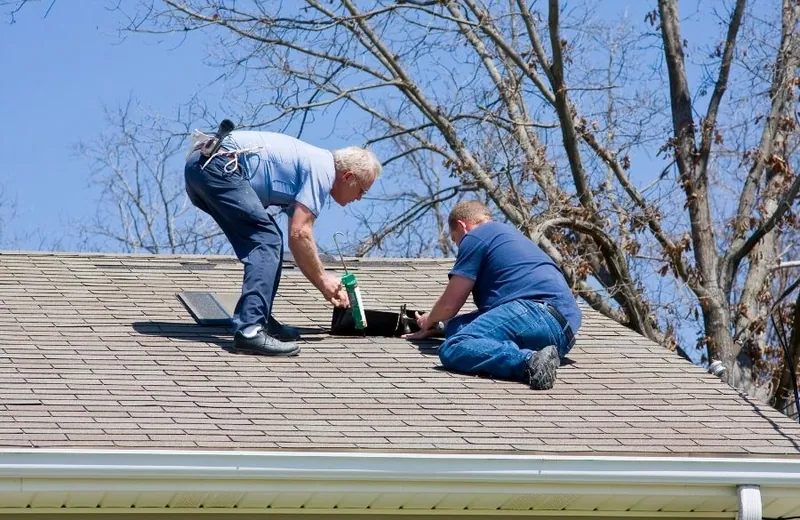
We find and fix leaks, wind damage, failed flashing, cracked or slipped tiles, worn pipe boots, and damaged shingles. The goal is to fix the source of the leak, not just smear sealant where the water shows up inside.

Our approach

We trace water paths from the attic and the roof surface, then replace failed components with matching materials. On tile roofs, that often means lifting tiles to repair the underlayment underneath instead of caulking the surface.

In Pomona, CA

Before winter, we focus on the weak points Pomona's dry season hides: brittle felt under Phillips Ranch tile, chimney flashing on Lincoln Park Craftsmans, and patio cover tie-ins on South Pomona ranch homes. Most of these can be repaired well ahead of the first storm.

Best for

Roofs with localized damage and plenty of life left, homeowners on a budget, and buyers who need documented repairs to close escrow or satisfy an insurer.

Specialty

Roof Replacement

We tear off the worn-out roof, repair or replace the decking, and install a complete new system: underlayment, flashing, ventilation, and roofing. That includes tile lift-and-relay projects that keep your existing tile and replace everything under it.

Our approach

Full tear-off down to the deck, solid sheathing where the code requires it, modern synthetic underlayment, new metal flashing, and Title 24-compliant cool-roof materials. We pull permits with the City of Pomona and schedule all required inspections.

In Pomona, CA

In Pomona, replacement often uncovers surprises like multiple shingle layers, skip sheathing, or older felts that may need SCAQMD-compliant asbestos testing. We plan for these in the bid and tell you about anything unexpected before we proceed.

Best for

Roofs with widespread granule loss or underlayment failure, repeated leaks, multiple old layers, or homes that need Class A and cool-roof upgrades.

Roof Installation

We install roofs on new construction, additions, ADUs, and patio covers, and we handle material conversions such as moving from heavy tile to lighter roofing or from aging shingles to cool-rated products.

Our approach

We match the roofing material to the pitch, structure, and exposure. That means proper slope for low-pitch areas, correct tie-ins to the existing roof, Class A assemblies, and balanced ventilation designed into the system from the start.

In Pomona, CA

ADUs and additions are popular across Pomona, and bad tie-ins are one of the most common leak sources we repair. We design each transition to handle intense rain and make sure the new roof meets Title 24 and, where applicable, Chapter 7A requirements.

Best for

New ADUs and additions, patio covers, new construction, and homeowners changing roofing materials for weight, efficiency, or appearance.

Roof Inspection

We do a thorough top-to-bottom evaluation of the roof surface, flashing, penetrations, gutters, attic, and ventilation, and you get a written summary with photos and prioritized recommendations.

Our approach

We walk the roof where it's safe, check the attic for stains and daylight, probe the decking for soft spots, look under lifted tiles at the underlayment, and document everything so you can see exactly what we saw.

In Pomona, CA

The best time for an inspection in Pomona is late summer or early fall, after the heat season and before the November–March rains. We also inspect for escrow, insurance renewals, and fire-zone documentation for homes near Ganesha Hills and Phillips Ranch.

Best for

Pre-storm-season checkups, home buyers and sellers, insurance documentation, landlords managing several properties, and anyone unsure about an older roof.

Roof Maintenance

Scheduled care that catches small problems before they turn into leaks: resetting slipped tiles, replacing cracked ones, resealing penetrations, cleaning gutters and valleys, and refreshing worn sealants and coatings.

Our approach

Typically one or two visits a year, with a pre-rain tune-up being the key one. Each visit includes a checklist, photo documentation, and a list of small repairs completed or recommended.

In Pomona, CA

Pomona's long dry season lets leaves, debris, and wind-shifted tiles build up unseen. A fall visit after Santa Ana season starts and before the first big storm prevents most of the emergency calls we get in January.

Best for

Tile roofs, flat roofs, rental and multifamily owners, long-time homeowners wanting to extend roof life, and anyone who'd rather prevent leaks than fix them.

Commercial Roofing

We repair, recoat, and replace flat and low-slope roofs on retail, office, mixed-use, and multifamily buildings, including built-up, modified-bitumen, and coated roof systems.

Our approach

Core samples and moisture checks to see what's under the surface, drainage corrections with tapered insulation and crickets, reflective coatings for UV and heat, and full membrane replacement when restoration won't hold.

In Pomona, CA

Downtown Pomona and the Arts Colony have early-1900s masonry buildings with parapets and aging built-up roofs. Properties near the Fairplex and the Holt Avenue corridor often deal with ponding. We schedule work around tenants and business hours.

Best for

Small commercial owners, property managers, mixed-use buildings, and multifamily landlords who want durable, cost-effective roofs with minimal disruption.

Emergency Roofing

Fast response when a storm or wind event opens your roof: tarping, temporary sealing, debris removal, and damage documentation, followed by a permanent repair plan.

Our approach

We secure the roof first, then photograph and document the damage for your insurance claim, and come back to make a proper permanent repair when the weather allows.

In Pomona, CA

When an atmospheric river or Santa Ana event hits Pomona, leaks pop up across the city at once. As a local crew, we're close by, and we know which roofs, slopes, and neighborhoods tend to take the worst of it.

Best for

Active leaks, wind-torn shingles or tiles, fallen-limb damage, and any situation where water is getting into your home or business right now.
Simple & Transparent

How Our Roofing Process Works

No surprises, no pressure, no disappearing crews. Here's what to expect from your first call to the final walkthrough, whether you need a small repair or a full replacement.

Free Inspection and Consultation

  • We inspect the roof surface, flashing, gutters, and attic
  • We photograph problem areas so you can see them yourself
  • We explain the repair-versus-replace options honestly
  • We answer your questions on the spot

We check for issues common in Pomona, such as brittle felt under tile, multiple layers on tract homes, skip sheathing on historic homes, and fire-zone vent requirements.

Usually scheduled within a few days; visit takes 45–90 minutes

Clear, Itemized Proposal

  • Written bid broken out by materials, labor, and disposal
  • Clear pricing for likely add-ons such as decking replacement per sheet
  • Material and color options, including cool-roof choices
  • Financing options explained if you want them

If your home is in a historic district or HOA, we tell you up front about any approvals needed and how they may affect timing.

Typically delivered within 1–3 business days

Permits, Approvals, and Scheduling

  • We pull the City of Pomona building permit
  • We help with HOA or historic review paperwork when needed
  • We arrange asbestos testing if older materials call for it
  • We set your start date and order materials

We schedule replacements for dry months whenever possible and plan around winter storm forecasts so your roof isn't left open.

A few days to several weeks, depending on permits and reviews

Installation and Daily Protection

  • We protect landscaping, walls, and driveways before starting
  • We tear off down to the deck and replace any damaged wood
  • We install underlayment, flashing, ventilation, and roofing
  • We clean up and run magnetic nail sweeps every day

During heat waves we start early in the morning for crew safety and so shingles and sealants go down at the right temperature.

Repairs: same day to 2 days. Replacements: typically 2–5 days. Tile relays and commercial jobs may run longer

Final Inspection and Walkthrough

  • Pass the city's final permit inspection
  • Walk the property with you and review the work
  • Provide photos and project documentation
  • Explain care, maintenance, and our follow-up

Your documentation is useful for insurance renewals, escrow, and Class A fire-rating verification, which more Pomona homeowners are being asked to provide.

Final day of work, plus the city inspection visit
The Pomona Roofing Group Difference

Why Pomona Homeowners Choose Pomona Roofing Group

Local Roofers Since 2005, Not Storm-Chasers

We've been roofing in Pomona since 2005, through heat waves, Santa Ana seasons, and the big storms of 2023 and 2024. We're not a crew that shows up after a storm, collects deposits, and moves on to the next county. We know how a Phillips Ranch tile roof fails differently from a Lincoln Park Craftsman or a Westmont ranch home, and that knowledge lets us diagnose problems faster. Much of our work comes from neighbors and referrals, so our reputation is on every roof we touch.

Bonded and Insured for Your Protection

Roofing is dangerous work, and if an uninsured crew gets hurt or damages your property, you could end up paying for it. Pomona Roofing Group is bonded and insured, so you're protected if something goes wrong. Before you hire any roofer, ask for proof of coverage and verify their contractor license with the California CSLB. A reputable company won't mind. We're happy to provide our documentation before any work begins.

Experts in Tile, Historic, and Problem Roofs

A lot of contractors avoid tile lift-and-relays, skip-sheathed Victorians, parapet-wrapped Spanish Revival homes, and tangled tract-home additions. We take them on. We know how to save and reset existing tile, add solid sheathing to century-old framing, flash parapets properly, and fix low-slope tie-ins so they actually drain. When historic review or HOA approval comes into play, we help you get through it instead of leaving you to figure it out alone.

Honest Repair-vs-Replace Advice

Not every leak needs a new roof. If a repair will reliably get you several more years, we'll say so, even though a replacement would be a bigger job for us. Many Pomona homeowners are on fixed incomes or managing rental properties on tight margins, and we respect that. You'll get photos of what we found, a plain-English explanation, and recommendations sorted by priority, so you can make the decision yourself without sales pressure.

Itemized Pricing and Flexible Financing

Our proposals break out materials, labor, tear-off, disposal, and permits, along with clear unit pricing for common surprises like rotted decking. That way you can compare bids fairly and you won't get hit with a mystery change order halfway through. When a needed replacement doesn't fit your budget all at once, financing is available to help spread the cost out, so you don't have to put off a roof that's already failing.

Clear Communication and Respect for Your Home

You'll know when we're arriving, what we're doing that day, and what we found. If something unexpected turns up after tear-off, we'll show it to you and talk it through before going further. We protect your landscaping and siding, keep the job site tidy, and run nail sweeps daily, because many of our customers have kids, pets, and grandparents in the home. When the job's done, we stand behind it.

Emergency Response When Storms Hit

When an atmospheric river or a Santa Ana wind event opens up your roof, you need a crew that's nearby. Our emergency roofing service covers tarping, temporary sealing, and documentation for insurance claims, followed by a proper permanent repair. Because we work within a 20-mile radius of Pomona, we're not trying to cover half of Southern California during a storm.

Trusted Locally

Trusted by Pomona Homeowners Since 2005

Our business has grown through word of mouth from Pomona neighbors. Families in historic homes, Phillips Ranch tile owners, landlords, and local business owners have trusted us with their roofs since 2005.

2005
Roofing in Pomona Since
20 mi
Service Radius
Free
Inspections & Consultations
7
Residential & Commercial Services
BondedInsured
Where We Work

Roofing Service Throughout Pomona

We work in every part of Pomona, from historic districts near downtown to hillside tile neighborhoods and the post-war tract areas in between. Each part of the city has its own common roof types and problems, and we know them well.

Historic Core and Downtown

Lincoln ParkWilton HeightsHacienda ParkDowntown Pomona / Arts ColonyGanesha Park area

Hillside and Planned Communities

Phillips RanchGanesha HillsMountain MeadowsCal Poly Pomona area

North, South, and Central Pomona

North PomonaSouth PomonaWestmontFairplex areaPomona Valley / Holt Avenue corridor

Based in Pomona, we serve homes and businesses within about a 20-mile radius of the city. If you're not sure whether you're in our area, contact us and we'll let you know. Not sure if we cover your area? Call (909) 365-2295.

Transparent Pricing

How Much Does a Roof Cost in Pomona?

Roofing costs in Pomona depend on more than square footage. Your roof's material, its age, what's hiding under the current layers, and permit requirements all affect the price. Here's what drives the cost, along with realistic ranges for common local projects.

Primary Factor

Roofing Material and System

Architectural asphalt shingles are the most affordable full-roof option. Concrete tile, clay tile, and specialty systems cost more for both materials and labor. A tile lift-and-relay reuses your existing tile, which often saves a significant amount compared with buying new tile. Cool-roof-rated products required under Title 24 may cost slightly more upfront but can lower summer cooling bills in Pomona's heat.

Primary Factor

Roof Size, Pitch, and Complexity

Roofs are priced by the 'square,' which equals 100 square feet. Steep Victorian gables, multiple valleys, dormers, skylights, chimneys, and parapets all add labor and flashing work. A simple low-pitch hip roof on a North Pomona ranch home costs far less per square than a cut-up Craftsman roof in Lincoln Park with several chimneys and steep, multi-level slopes.

Major Factor

Tear-Off Layers and Decking Condition

Many older Pomona homes have two or more roofing layers, and each one adds tear-off and disposal cost. Rotted decking, termite-damaged fascia, or skip sheathing that has to be covered with new solid plywood can add anywhere from a few hundred to several thousand dollars. We price decking replacement per sheet in our bids so you know exactly what to expect.

Moderate Factor

Code, Fire-Zone, and Historic Requirements

City permit fees, Title 24 cool-roof compliance, Class A assemblies, and ember-resistant vents in fire hazard zones all affect the final price. Historic district review can call for period-appropriate materials. On older homes, SCAQMD-required asbestos testing typically adds a few hundred dollars, and abatement, if it's needed, costs more.

Optional Factor

Ventilation and Energy Upgrades

Adding ridge vents, balanced soffit intake, radiant barriers, or ember-resistant vents typically costs a few hundred to a couple thousand dollars. In Pomona's climate, these upgrades often pay off through longer roof life and lower air-conditioning bills, especially on post-war homes that never had adequate attic ventilation.

Typical projectDetailsEstimated range
Leak repair and flashing replacementSingle-story home, chimney or wall flashing failure, small section of underlayment and shingles or tiles$450 – $1,800
Asphalt shingle replacement1,600 sq ft North or South Pomona ranch home, tear-off of 1–2 layers, cool-rated architectural shingles, new ventilation, permit$11,000 – $19,000
Tile underlayment lift-and-relay2,000–2,400 sq ft Phillips Ranch concrete tile roof, reuse existing tile, new underlayment and flashing, replace broken tiles$15,000 – $28,000
Flat roof restoration or replacement2,500–4,000 sq ft downtown commercial or multifamily roof, drainage corrections, coating or new modified-bitumen membrane$10,000 – $36,000

Financing is available for qualified customers, so you can take care of a failing roof now and pay over time. Ask us about options during your free consultation. A properly installed roof protects everything beneath it. Fixing failing underlayment or flashing before winter almost always costs far less than repairing water-damaged ceilings, insulation, drywall, and framing after a storm.

Questions & Answers

Pomona Roofing FAQs

How much does a new roof cost in Pomona?

For a typical 1,500–2,000 sq ft Pomona home, a full asphalt shingle replacement usually runs about $11,000 to $22,000, depending on the number of layers removed, decking condition, and roof complexity. A tile underlayment lift-and-relay on a similar-sized home often falls between $15,000 and $28,000, and new tile costs more. Small leak repairs commonly range from $450 to $1,800. The most accurate number comes from an on-site inspection. Ours is free, and our bids are itemized so you can see where every dollar goes. Financing is available too.

My tile roof is supposed to last 50 years. Why is it leaking?

The tiles may last 50 years, but the underlayment beneath them usually doesn't. Tile mostly sheds water. The felt or synthetic layer underneath does the actual waterproofing. In Pomona's heat, original felt from the 1960s–80s often turns brittle and cracks after 25–35 years, especially on sunny slopes. That's why so many Phillips Ranch homes with good-looking tile still leak. The usual fix is a lift-and-relay: we remove and save your tiles, replace the underlayment and flashing, and reset the tiles, which usually costs well below a full re-tile.

Do I need a permit to replace my roof in Pomona?

Yes, in most cases. Reroofing generally requires a permit and inspection from the City of Pomona Building & Safety Division. The work has to meet California building codes, including Title 24 cool-roof requirements when a large share of the roof is replaced, and Chapter 7A fire-resistance rules in Very High Fire Hazard Severity Zones. Homes in Lincoln Park, Wilton Heights, or Hacienda Park may also need historic review, and Phillips Ranch HOAs often require approval. We pull the permits and coordinate inspections for you.

How long does a roof replacement take?

Most residential asphalt shingle replacements in Pomona take 2–5 working days once materials arrive. Tile lift-and-relays, steep historic roofs, and jobs with a lot of decking replacement can take a week or more. Commercial flat roofs vary with size and drainage work. Permitting, HOA approval, or historic review can add days or weeks before work starts, so plan ahead. We try to schedule replacements in the dry months and keep an eye on the forecast so your roof is never left exposed overnight.

When is the best time to get my roof inspected?

Late summer through October is ideal in Pomona. By then the roof has been through the worst of the heat, and there's still time to make repairs before the November–March rains. Leaks hide during our 7–8 dry months, then show up across town in the first big storm, when roofers are booked solid. An inspection is also a good idea after a strong Santa Ana wind event, before buying or selling a home, and when your insurer asks for roof condition documentation.

How do I know whether to repair or replace my roof?

Repair usually makes sense when the damage is limited to one area, the roof is under roughly 15 years old, and the underlayment is still sound. Replacement is the better call when you see widespread granule loss, curling or cracking across several slopes, repeated leaks in different spots, soft decking, or a tile roof whose underlayment is failing everywhere. If we think a repair will give you good years, we'll tell you. We show you photos of what we found so the decision is yours.

How can I prevent roof leaks during Pomona's rainy season?

Get a pre-season inspection, and clean gutters, valleys, and roof drains before November. Have slipped or cracked tiles reset or replaced, and make sure flashing around chimneys, walls, and parapets is sealed mechanically, not just caulked. Trim branches that overhang the roof. On flat roofs, clear the scuppers and recoat worn surfaces. After any strong Santa Ana wind, look for missing shingles or ridge tiles from the ground. A yearly maintenance visit catches most of these problems before they turn into emergency leaks.

What should I do if my roof is leaking right now?

First, protect what's inside. Move valuables, put a bucket under the drip, and if water is pooling in a bulging ceiling, carefully poke a small hole to drain it. Stay away from wet electrical fixtures. Don't climb onto a wet roof. Then call us for emergency roofing service. We'll tarp or temporarily seal the roof, document the damage with photos for your insurance claim, and come back with a permanent repair plan once the weather clears.

Find Us

Serving Pomona, CA & Nearby

364 S Gordon St, Pomona, CA, 91766

Ready When You Are

Schedule Your Free Pomona Roof Inspection Today

Don't wait for the first big storm to find out your underlayment has failed. Let a local crew that's been roofing in Pomona since 2005 check your roof now, while there's still time to plan.

  • Free, no-pressure roof inspection and consultation
  • Photos of your roof's condition you can see for yourself
  • Honest repair-versus-replace recommendations
  • Clear, itemized written proposal
  • Permits and city inspections handled for you
  • Bonded and insured crew that respects your home
  • Financing available for qualified customers

Serving all of Pomona, including Lincoln Park, Phillips Ranch, Ganesha Hills, Downtown, and North and South Pomona, plus communities within a 20-mile radius.

Roof leaking or damaged by wind right now? Call us for emergency tarping and repair.

Bonded · Insured

Pomona Roofing Group Free estimates across Pomona, CA